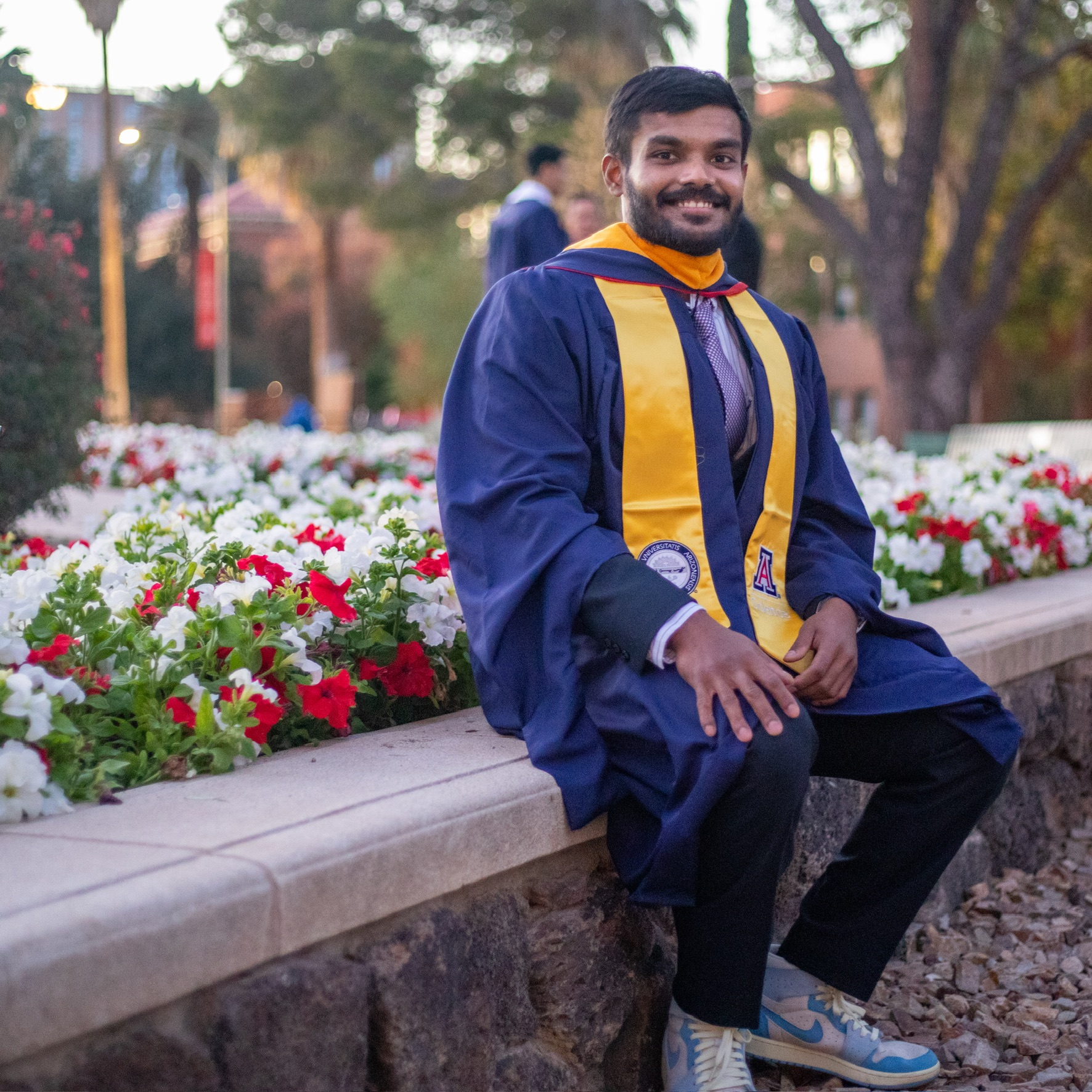
I build systems that turn noisy signals into meaning — from brain–computer interfaces to in-field nutrient sensors, and the ML, firmware, and cloud that run them.
fNIRS · EEG · imaging
Now — Founding Engineer, PAGE Technologies · Boulder, CO
Caleb works at the seam of neuroscience, machine learning, and software engineering. For most of a decade he's been decoding brain activity — fNIRS, EEG, and voltage imaging — and building the real-time systems, pipelines, and models that turn those signals into something usable.
His research runs from brain–computer interfaces and neurofeedback to explainable AI; his engineering runs from embedded firmware to ETL at scale to AI products in production. He's as interested in why a model makes a prediction as whether it's right. Today that means building PAGE Technologies' field nutrient sensors — the same decode-the-signal problem, now in soil and water instead of cortex.
Brain–Computer Interfaces
Real-time acquisition and decoding of fNIRS and EEG into discrete brain states.
Neurofeedback
Closed-loop games and interfaces driven by live signal classification.
Machine & Deep Learning
Supervised, unsupervised, and reinforcement learning across signal, image, and text.
Explainable AI
Interpreting predictions down to the contributing channel with DeepSHAP.
Signal & Image Pipelines
Motion correction, source extraction, and ETL for large microscopy and physiology datasets.
Production Systems
Embedded firmware in C with MQTT / AWS IoT, plus cloud APIs and interfaces.
AgTech · PAGE Technologies
From electrode to dashboard.
At PAGE Technologies, Caleb builds the Autosampler — a field instrument that automatically samples, measures, and uploads nutrient levels (nitrate, potassium, calcium, ammonium) from greenhouses, soil, and water systems. It's the same problem as the rest of his work in a new medium: take a noisy analog signal and turn it into something you can act on. He owns it end to end — the firmware on the device, the models that read the chemistry, and the platform growers log into.
Electroderaw mV
CalibrateNernst + ML
ConcentrationPPM, on-device
UplinkMQTT · TLS
Dashboardlive + alerts
Firmware
Embedded · C / ESP32
Autonomous sampling firmware on ESP32 (ESP-IDF, FreeRTOS) running unattended in the field.
Drives the fluidics — pumps and valves over an I²C GPIO expander — plus BLE WiFi provisioning for setup.
Secure MQTT-over-TLS telemetry to AWS IoT, with on-device logging and quality gates so only trustworthy readings are reported.
ESP32ESP-IDFCFreeRTOSMQTT / TLSBLE
Machine Learning
Sensor calibration · signal
Converts raw ion-selective-electrode voltages into nutrient parts-per-million, right on the device.
Pairs physics-based Nernst/Nikolsky calibration with gradient-boosted models (LightGBM) to push accuracy further.
Extends calibration life so biosensor cards are insert-and-run — handling drift and outliers across messy field conditions.
Full academic scholarship — M.S. in Computer Science, University of Arizona.
Experience
A decade of decoding.
Aug 2025 — PresentBoulder, CO
PAGE Technologies Founding Engineer · ML & Signal Processing
Building the Autosampler nutrient-monitoring platform across the whole stack — firmware, ML, and cloud (details above).
Designed the ML calibration and sensor-fusion pipeline behind the platform's $400,000 EPA SBIR Phase II award; named co-inventor on the company's U.S. patent application (filed Dec 2025).
Firmware in C on ESP32 (ESP-IDF / FreeRTOS): fluidics control, BLE provisioning, and secure MQTT-over-TLS telemetry to AWS IoT.
On-device ML that turns ion-selective-electrode signals into nutrient PPM, plus a serverless AWS backend and a Vue / TypeScript dashboard with alerts and SCADA integration.
Computer Connection Wisconsin Web Developer / LLM Engineer
Built and deployed a RAG support chatbot with human-agent escalation and a ticket-based follow-up system.
Maintained and updated the company's web properties.
Mar 2025 — PresentIndependent
Sermon RAG LLM Engineer · Side Project
Built a Django Retrieval-Augmented Generation system answering sermon questions over a custom dataset scraped from YouTube, using Google Gemini and FAISS vector search.
Added semantic search with YouTube-timestamp linking; deployed on Heroku and AWS.
Applied transfer learning to generate real-time neuron masks for the SLAP2 microscope, removing manual annotation from voltage-imaging workflows.
Designed an iGluSnFR motion-correction pipeline for dendrite imaging that outperformed Suite2p, CaImAn, and Patchwarp, with an ETL framework for large datasets.
Built an iGluSnFR simulation pipeline and contributed to super-resolution source extraction for synapse identification; co-authored a forthcoming methods paper.
Built a neurofeedback game with real-time fNIRS filtering and live deep-learning brain-state prediction driving the gameplay.
Developed an explainable fNIRS classifier with DeepSHAP that attributes each prediction to specific signal channels.
Sep 2020 — Jan 2021Memphis, TN
St. Jude Children's Research Hospital Researcher
Built a deep-learning classifier separating active vs. passive brain states in single-trial lower-limb motor preparation for stroke patients — resolving knee- and hip-driven activations in closely adjacent motor cortex.
Jun 2019 — Sep 2020Kerala, India
SCTIMST Researcher
Engineered handcrafted fNIRS features with PCA and ICA to boost SVM and KNN classification accuracy.
Built sliding-window CNN and LSTM models that lifted fNIRS classification accuracy from 55% to 97%.
Publications
Selected papers.
2023
The ToMCAT Dataset
A. Pyarelal, E. Duong, C. J. Shibu, P. Soares, S. Boyd, P. Khosla, V. Pfeifer, D. Zhang, E. S. Andrews, R. Champlin, V. P. Raymond, M. Krishnaswamy, C. Morrison, E. Butler, K. Barnard
37th Conference on Neural Information Processing Systems (NeurIPS) — Datasets & Benchmarks Track, 2023
@inproceedings{pyarelal2023tomcat,
  title     = {The ToMCAT Dataset},
  author    = {Pyarelal, Adarsh and Duong, Eric and Shibu, Caleb Jones
               and Soares, Paulo and Boyd, Savannah and Khosla, Payal
               and Pfeifer, Valeria and Zhang, Diheng and Andrews, Eric S.
               and Champlin, Rick and Raymond, Vincent Paul
               and Krishnaswamy, Meghavarshini and Morrison, Clayton
               and Butler, Emily and Barnard, Kobus},
  booktitle = {Thirty-seventh Conference on Neural Information Processing
               Systems Datasets and Benchmarks Track},
  year      = {2023},
  url       = {https://openreview.net/forum?id=ZJWQfgXQb6}
}
2023
Decoding Emotional Responses: A Comparative Study of fNIRS and EEG Neuroimaging Techniques
@mastersthesis{shibu2023decoding,
  title  = {Decoding Emotional Responses: A Comparative Study
            of fNIRS and EEG Neuroimaging Techniques},
  author = {Shibu, Caleb Jones},
  school = {The University of Arizona},
  year   = {2023},
  url    = {https://repository.arizona.edu/handle/10150/670846}
}
2022
Explainable Artificial Intelligence Model to Predict Brain States from fNIRS Signals
C. J. Shibu, S. Sreedharan, K. M. Arun, C. Kesavadas, R. Sitaram
Frontiers in Human Neuroscience — Brain-Computer Interfaces, 2022
@article{shibu2022explainable,
  title   = {Explainable artificial intelligence model to predict
             brain states from fNIRS signals},
  author  = {Shibu, Caleb Jones and Sreedharan, Sujesh
             and Arun, K. M. and Kesavadas, Chandrasekharan
             and Sitaram, Ranganatha},
  journal = {Frontiers in Human Neuroscience},
  year    = {2022},
  doi     = {10.3389/fnhum.2022.1029784}
}
2020
Comparison of Classification Performance of Handpicked, Handcrafted, and Automated Features for an fNIRS-BCI System
C. J. Shibu, S. Sreedharan, K. M. Arun, C. Kesavadas
5th International Conference on Intelligent Informatics and Biomedical Sciences (ICIIBMS), IEEE, 2020, pp. 152–157
@inproceedings{shibu2020comparison,
  title     = {Comparison of classification performance of handpicked,
               handcrafted, and automated-features for fNIRS-BCI system},
  author    = {Shibu, Caleb Jones and Sreedharan, Sujesh
               and Arun, K. M. and Kesavadas, Chandrasekharan},
  booktitle = {2020 5th International Conference on Intelligent
               Informatics and Biomedical Sciences (ICIIBMS)},
  pages     = {152--157},
  year      = {2020},
  publisher = {IEEE},
  doi       = {10.1109/ICIIBMS50712.2020.9336392}
}
Contact
Building something that turns noisy signals into meaning? Let's talk.